Sunday, November 22, 2009

Week 2

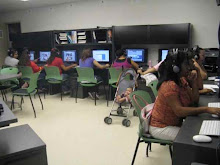
This week we had a group discussion about whether internet safety is important. I provided a few statistics to get everyone started. It was slow starting, but once we got past the initial awkwardness, everyone had lots to share.

They agreed that internet safety was important. I asked whether it was any more important than teaching their kids about any other safety matters. The consensus seemed to be that it was at least as important, if not more important. It seemed that the one thing that stuck out for the women was that their children could access more people and more things more easily with the internet, than if they didn't have it. Everyone seemed to be very concerned about their children meeting someone offline that they'd met online - and that it would be unsupervised.

They all knew about the experience with the youngest woman's sister posting to her MySpace account that she was 23, when in reality she was 15. We had a discussion about what we would do if we found out our kids were doing something online that we didn't think was appropriate. They all wanted to know how the mom had handled the mistruths on the MySpace account. Apparently, the young woman had been confronted, but had told her mom that one of her friends had changed her age. I was surprised that the mom, sister and other ladies in the group believed her. Perhaps I'm just too cynical - cause I didn't. However, it brought up a topic for the class - don't share passwords.

As the discussion progressed, we came back to this example several times. It turned out that the girl was meeting someone offline that she'd met online. All of us were surprised. We asked if there were any repercussions for this and there didn't seem to be any. This was a little bit of an eye opener - cause they knew this young woman (or at least they knew the mom and the sister.) Everyone seemed to be of the same opinion that this wasn't OK. One lady pointed out to the woman with the 14 year old that her child would be in high school next year - and what would she do if her son started doing this.

We discussed chat rooms and whether MySpace was similar or different than chat rooms. They all agreed that they were. Samantha had them go into a Spanish chat room. One lady said they were totally ignored until she said something with a sexual overtone and all of the sudden she had lots of "friends." It seemed that the ladies had the same opinion about chat rooms that many of the teenagers expressed in surveys - they're icky.

We discussed cyberbullying. They couldn't understand why kids wouldn't just ignore people who were mean online. I explained that it probably has to do with the child - some probably don't care, but others are really sensitive. I also suggested that this becomes permanent and anyone online can read it which makes the problem "bigger" than something that might be contained in a classroom. We also talked about how most of the friendships online are also friendships (or acquaintances) offline. This probably compounds the problem. The ladies liked the MySpace feature that allowed people to block folks they didn't want to talk to.

At the end of the 1.25 hour chat, we asked for things they'd like to see in a class that they thought would be helpful. The ladies specifically asked for us to give them specific examples of the consequences of unsafe internet experiences. The suggestion was made that we need to teach them all about how to access things online because they thought familiarity would help them teach their kids.

At least two of the women are considering purchasing computers for their home. We discussed whether they would have internet access and they both hoped to. They wanted us to teach them about filters and how to set them up. We talked about using anti-virus protections to keep the porn problem to a minimum. We also mentioned one of the best practices suggested by almost every internet safety tip provider - keep the computer in a family place, not a bedroom.

The quietest woman is very reflective and kept saying that parents need to have a good relationship with their children and this should prevent problems. They all supervise their children well so think this will help prevent undesirable internet experiences. I brought up cell phones and sexting and asked how they're going to monitor this. This brought us back to the 15 year old and whether the mom should be constantly checking her MySpace account. The woman in our group (who's her sister) said that the mom doesn't. They all thought they would insist that their child provide them with their password. Although this sounds good, I thought that they might be in for surprise when their kids have more than one account.

Samantha suggested that they do some homework and talk to others about their thoughts. The comedian of the group said she was going to go talk to the mom of the 15 year old for her homework. She said she also thinks that this is the lady she needs to teach about internet safety.

Report for school
Where I am now - 1st Report
I'm ready to start on lesson plans.

Progress made since last report
During the 1st week, I have met with all of the ladies as a group. We discussed the study - our expectations - their expectations. We met with the ladies individually for 30 minutes to an hour depending on the person. Some ladies were much more willing to speak in this interview than others. (Please see 11/15 blog post for week 1 for details.) After the interview, they took their computer use assessment. All of them passed very easily. I was very impressed with the ladies who were willing to try speaking English with me on the individual interview.

This past week we did another group interview to have them get a feel for what they were all thinking about internet safety. It started slowly, but they quickly warmed up. (See blog post for 11/22 for details.) I thought it was interesting that none of them tried to speak English at all during the group session.


I think we have some solid ideas for lesson plans.

Potential Problems
Trying to cram lesson plans into 1 week.

We are still unsure how AZ House Bill 2008 is going to impact residents of public housing, and thus how it could impact this study. This bill requires all persons receiving public benefits (except those of an emergency nature - in other words, we wouldn't deny police or fire protection) to provide specific documentation to prove citizenship. My feeling this week is that management is trying to minimize the impact on 11/24 and possibly spread it out as each person recertifies their income and documents for a new lease. Other AZ public housing authorities say it doesn't impact public housing; however, our attorney and the state housing authority's attorney disagree.

Although so far, the ladies have found babysitters for the kids, this may not last.

Ways I plan to solve the problems
The lesson plans aren't a problem - it's the research. Without my laptop (destroyed in flood caused by defective plumbing), I'm having some issues; however, I'll just try to stay later at work, borrow my sister's laptop or something like that. The problem with using the Mac for research is that it is not currently in a comfortable location (flood issues) and causes my neck and back to hurt.

I think that all of my ladies are safe from imminent repercussions from HB 2008 - at least for the time being. It still looms, but isn't as threatening as the last time I reported.

Samantha and I have been prepared for kids ever since the 1st time the ladies brought them. We have explained to them that if it becomes necessary to bring them - we'll just deal with it. We've got a stash of toys and crafts ready to go. It will be distracting - but it's life.

Help I need
I'm not sure I need help right now. We'll see how next week goes.

Where I am going next
Next week, we won't meet with the ladies. We did ask them to bring us any ideas they had, but we'll have a very short week so may not hear from them until the following week.

Instead I plan to work on lesson plans.

Sunday, November 15, 2009

Week 1

We've made progress. There were two meetings with the identified women this week. I met the women for the 1st time on Tuesday. It seems like they were pleased to be asked, but were very hesitant. I can certainly understand that as we didn't really know each other although I had seen at least one of them at a recognition ceremony the year before.

There were 3 young kids with the ladies, two of which belonged to the oldest woman. The youngest child was as determined to keep away from his mom as his mom was to keep him with her. We didn't have any toys and I hadn't come prepared with stuff to keep the kids entertained. I should have known better. The kids' behavior was making the mom ill at ease and she said she wasn't sure she could participate because of the kids.

They asked a few questions, particularly about who they had to teach the information to. We explained that they could teach a friend or neighbor. They were comfortable with that info.
They all signed the consent forms. Samantha had prepared an initial calendar for them about when we'd meet which we passed out. They agreed to meet for their interview and skills assessment on Friday.

Friday was a really hectic day and it took me awhile to settle down. We were prepared for kids. I had brought a wooden train set from home - usually keeps my Sunday School kids occupied for a long time. We had also bought some toys for our computer lab that just happened to be delivered the night before. We were ready - but no kids. The moms had decided to take turns watching the kids while the others were being interviewed.

I had prepared several questions to guide the interviews, but knew it would take awhile before they'd answer in more than just one or two words. I wanted some basic questions since I wanted to try to understand their Spanish with only a little translating. That part went better than I expected and they seemed pleased that I could understand at least a little. One woman talks too quietly and fast for me though, so that whole interview had to be with Samantha interpreting.

The three women have been in ESL classes at the computer lab and all have taken at least 2 basic computer classes. One lady is on the 4th level of Rosetta Stone. The two younger women spoke to me at times in English. Their time in public housing ranged from 2 months to 9 years. Number of kids ranged from 2-5. Only 1 woman had a teen. The others had oldest kids in the 10-12 year old range. I had been told by Samantha that all the women are very protective of their children - to the point of checking with Samantha to make sure they're really at the lab.

I first asked them to tell me about themselves. There were some amazing stories. All had been in the US for a number of years - all coming when they were teenagers. Two had been in school for 9 years in Mexico. One had finished 6 years. One went to high school for a year in the US, but then dropped out because she needed to watch her sister's 5 kids while she went to work. One woman made the trek from Mexico to Phoenix through the desert. She was 13 and 5 months pregnant. She only went to school for a few months after she came to the US because her baby's daddy wouldn't let her go.

Two of the women talked about getting their GED. They both said they needed to know more English first.

The next question was about their computer experience. None of them had computers in their homes and none of them appeared to have friends or relatives with computers. All of them said the only computer experience they had was there at the computer lab. The youngest woman has a cell phone with internet access. All of them have at least one child who has taken classes at our computer lab. Their kids' computer experience seemed to be restricted to the computer lab and school.

I asked about their dreams for their kids. All of them want their kids to do well. One specifically mentioned that she wanted her kid to be a professional. We discussed colleges and scholarships. One woman said she wanted her children to be good people and love God. What better goal for our kids could there be?

Finally we discussed internet safety. They mentioned some of the top concerns - chat rooms, talking with people they don't know, pornography and other inappropriate content. All of the women knew that we had filters on our internet connection in the lab. One woman asked if schools had the same thing. I explained that they were required to. I asked the women if they knew what their kids did with computers. One said her child plays games, another said her child is very curious so looks up things on the internet. I asked if they knew what their kids did at school on the computer. They didn't know. One woman mentioned that her child was not doing her homework. I asked if she could access her child's schoolwork reports on the internet and she said, "no." I asked if they had something like that, would she? She said, "of course." I loved that. I think sometimes school districts think that just because their parents don't have home access, that they won't use internet tools - but parents who care will take the time.

They all took the basic assessments and did great. When asked to send Samantha an email, one woman responded to an email of Samantha's. Samantha told her she was cheating (jokingly). I said she was just being smart. Samantha used English terms for computer parts. She said that since they probably don't know the Spanish word, that it's just as easy for them to learn the English words. I thought that was a good idea.

Next week, we'll meet again on Friday to have a group discussion about internet safety.

Sunday, November 8, 2009

It begins

It is with all good intentions that Gail and I continued this blog (it was started as a requirement for a class), but to date, there's only 1 post that has nothing to do with school work...

and the school work continues.

Intro
This blog will now journal work on a research project about internet safety for families who live in public housing. The project culminates my years working on a Master's Degree in Bible and Educational Technology at Johnson Bible College in Knoxville, TN - a truly lovely venue.

Earlier this week I was given permission by my graduate school advisor, Dr. Chris Templar, to move forward on the project. I am already two weeks behind based on the timeline in the JBC Graduate Handbook so started looking for ways to "catch up."

The project will use a case study approach and follow 3 Hispanic women as we move through the development and implementation of an internet safety curriculum. There are elements of a participatory model as we will interview them to gain insight into their perceptions of internet safety and their ideas of what is important for them to learn. There is also a component of a train-the-trainer model in that the initial trio will teach at least one other person. Success, as defined in the original proposal, will mean that the 2nd generation of women are able to create and use a MySpace page.

Where I am now - Initial Report
I met with the computer lab facilitator who will work with me most closely on this project on Thursday afternoon. Her name is Samantha and she's 2 credit hours shy of having her AA in computer technology with special certificates in networking and web design. She's bilingual which is almost a requirement for direct service providers who work with low income adults in Arizona. (I am a monolingual supervisor for social services programs offered to participants in Phoenix assisted housing programs - with limited direct service contact.) I have suggested that Samantha ask her school if she could do an independent project in conjunction with my project.

Samantha and I also explored several websites that are dedicated to helping parents learn more about internet safety. Some information was already translated into Spanish. Samantha showed me how to use Google Translate for other articles. She's very patient as I try to read Spanish to see if the info is important or relevant. She also suggested that many of her parents love Web MD so we checked out internet safety and found several good articles on Web MD. This could be a good place to have them start.

We also discussed having someone from law enforcement speak to the group for about 20 minutes. Research shows that persons tend to find the information more reliable if it is given by someone who has some type of credible authority. We decided that if we can find someone to do this, we would videotape them for use with future groups.

Progress made since last report
NA

Potential Problems
Project is already 2 weeks behind.

We have a significant issue with consistent attendance so that, and some basic computer experience are the main factors for selecting candidates.

Samantha and I discussed whether the implementation of AZ House Bill 2008 will have any impact on us and the participants. Although this legislation is supposed to begin on 11/24, the Housing Department and its attorney have not decided how to interpret and put into practice its requirements. There is considerable speculation that HUD programs would be exempt; however, if it is determined that the Housing Department must comply, we would be required to report all non-citizens in Housing Department programs to some unnamed legal body. Consequences for non-compliance could be an arrest for a Class 2 misdemeanor. I am hoping for a resolution early next week. The interesting part is that almost all of the parents who participate in our programs are most likely non-citizens. It has been my experience that they are more motivated learners - especially if there's a willingness to bridge the language gap.

Ways I plan to solve the problems
At our meeting, we reviewed the basic timeline and decided we will attempt to accomplish the 1st 2 weeks of activities identified in the proposal next week even though there's a holiday in the middle of the week. We also decided we could probably condense some things over Thanksgiving break. I also found out that Samantha had already translated the consent form into Spanish which was a great relief.

We hope to address attendance prior to the start of the project, by identifying persons who are more reliable and interested. Samantha has identified 3 prime candidates for the project based on their attendance, experience and interest. Two have attended classes at the computer lab for 1-2 years. The other woman is much younger and newer to the program, but has been attending regularly. All are Spanish dominant and all may be non-citizens. (The fact that their children were born in the U.S. makes them eligible to live in public housing - although the portion of the rent that is for non-citizens is not subsidized.)

Unfortunately I cannot solve the 2nd problem myself. This will have to await direction from counsel. Samantha and I discussed whether there is the potential for finding citizens to participate, but they just haven't proven very reliable. I want to wait another week before I decide whether this will become critical.

Help I need
NA

Where I am going next
Next week, we will explain the project, have consent forms signed, have participants take the screening test on Tuesday, and have the 1st individual interviews on Friday.

We'll see how it goes...